Backcountry Skiing in Chile
Skin up active and dormant volcanoes, ski long descents down their flanks, and end the day in natural hot springs — across Chile's Lake District and beyond.
From the Lake District to northern Patagonia, the Andes overflow with snow-capped volcanoes — and few places on Earth match Chile for variety of terrain, easy access and views that stretch from Argentina to the Pacific.
Speed down volcano flanks, take in the only fjords in South America, and be at one with the mountains. In the Lake District you can ski-tour or splitboard up active and inactive volcanoes and finish the day soaking in a natural hot spring — locally known as termas. With a camper as your base, you can move from volcano to volcano at your own pace.
Chile's ski season: when to go
Chile's reverse seasons let you keep your skis waxed from June to October — a refreshing antidote to the Northern Hemisphere summer, and a rite of passage for skiers chasing the Andes. The window matters: midwinter (June–July) brings the deepest, coldest snow, while the classic spring "corn" cycles typically begin in late August and peak in September and October, when stable weather and corn snow make for some of the best volcano touring of the year.
⚠️ Backcountry safety: volcano touring means glaciers, avalanche terrain and fast-changing weather — and several of these peaks are active volcanoes whose summits depend on the official SERNAGEOMIN alert level. Go with a certified mountain guide (IFMGA/AAGM), carry avalanche safety gear, and always check conditions and volcanic alerts before heading up.
The volcanoes at a glance
Roughly from south to north, here's how the main zones line up across the Andes.
The zones, one by one
La Picada
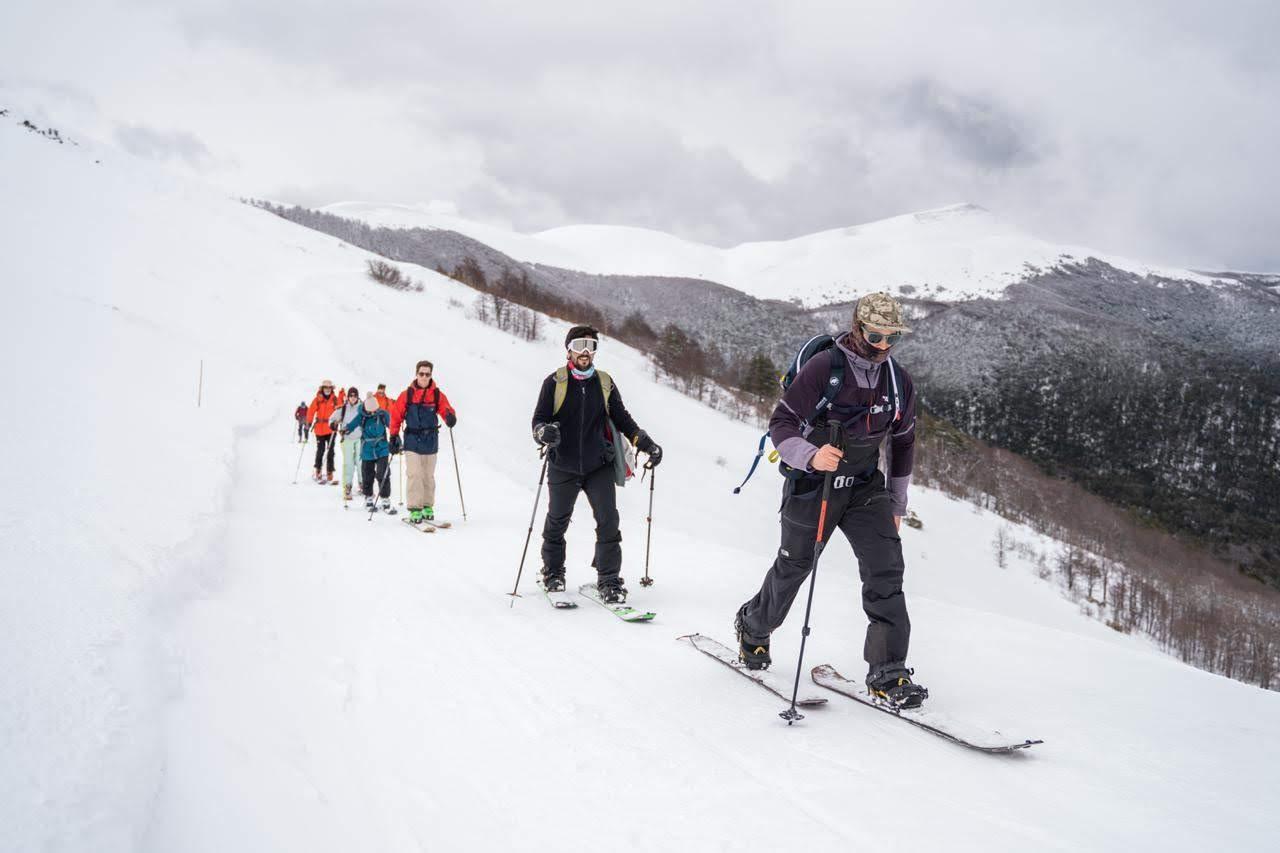
The mellower, quieter way onto Volcán Osorno, on its northeast side within Vicente Pérez Rosales National Park. You skin up through native forest onto open snowfields, with sweeping views over Lake Llanquihue and toward Puntiagudo and Tronador. Less crowded and less technical than the volcano's steeper faces — a great warm-up tour or a relaxed powder day close to Puerto Varas.
Volcán Osorno
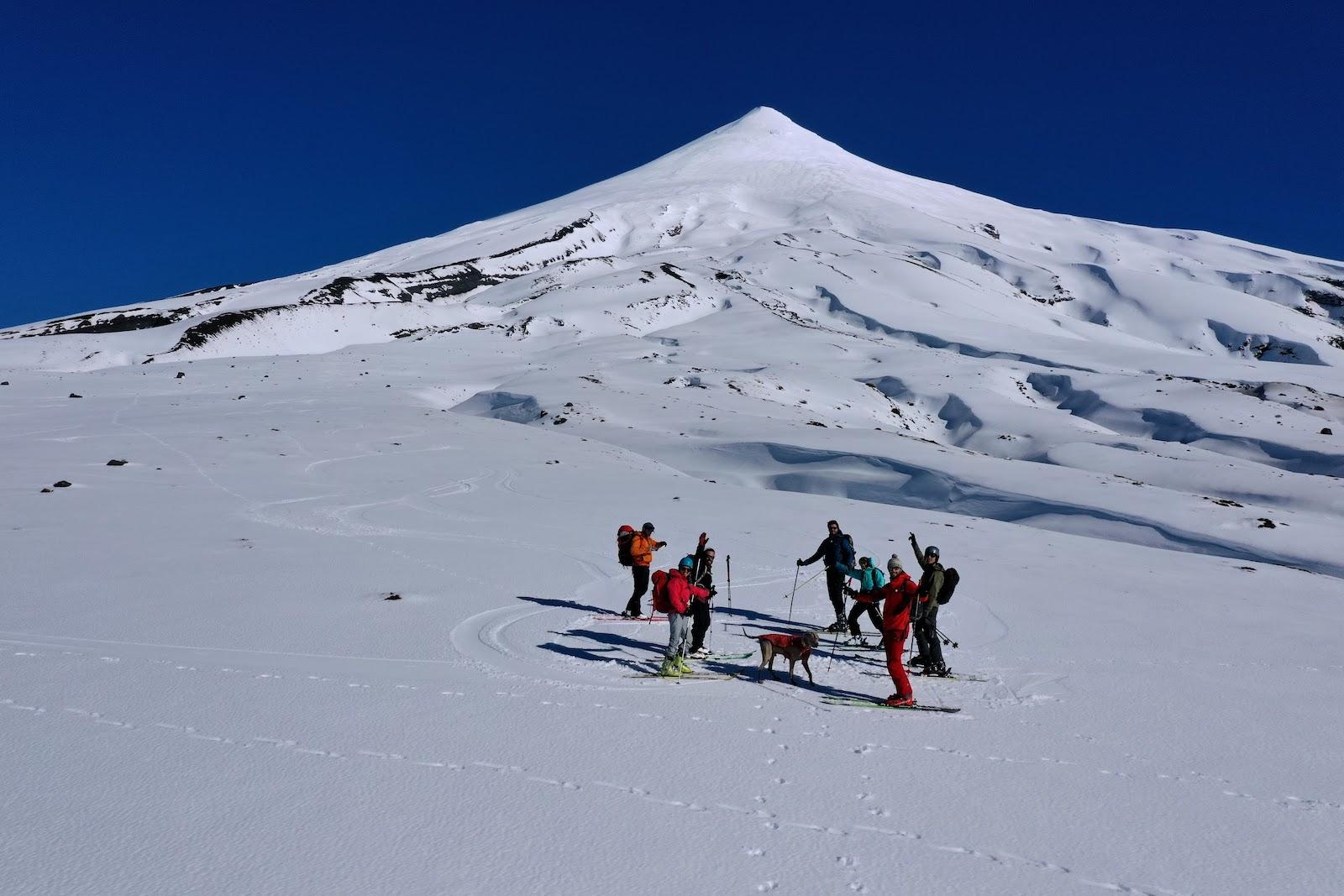
The perfect cone rising straight out of Lake Llanquihue, and one of the region's signature objectives. A classic ascent gains around 1,500 m (5,000 ft), much of it skinnable, with glaciated terrain higher up — crevasse hazard means you'll want a rope and a guide near the top. The reward is a long, sustained descent down the flanks with the lake glittering below. The Teski hut at the base makes a handy launch point.
Antillanca
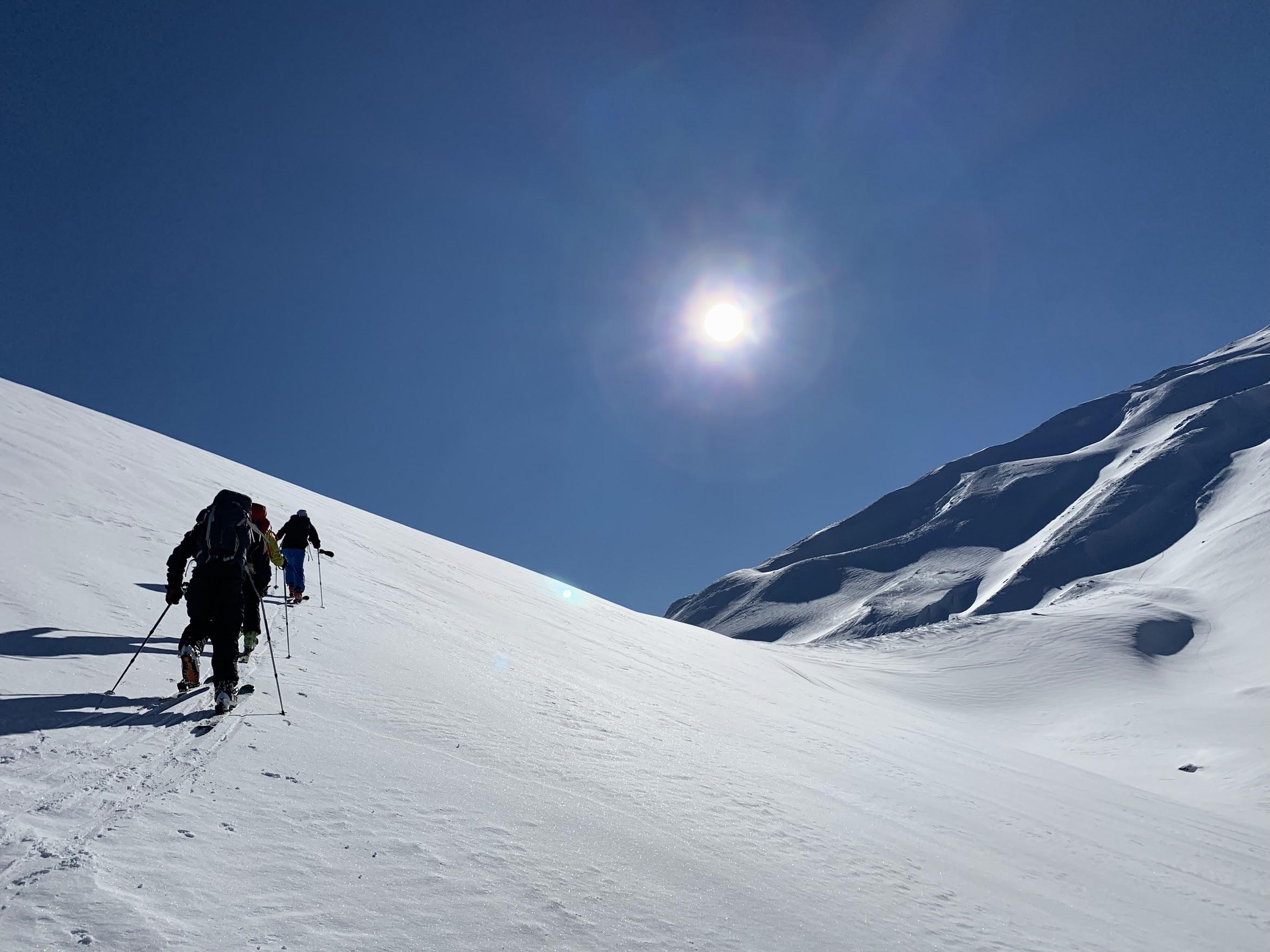
A small ski center on the flanks of Volcán Casablanca inside Puyehue National Park, surrounded by coigüe and lenga forest. The lifts give easy access to a generous amount of approachable backcountry terrain, with panoramas toward Osorno, Puntiagudo and Tronador. Pair days here with a soak at the nearby Aguas Calientes / Puyehue hot springs — an ideal spot for mellow touring and mixed resort-plus-skin days.
Volcán Choshuenco (Mocho-Choshuenco)
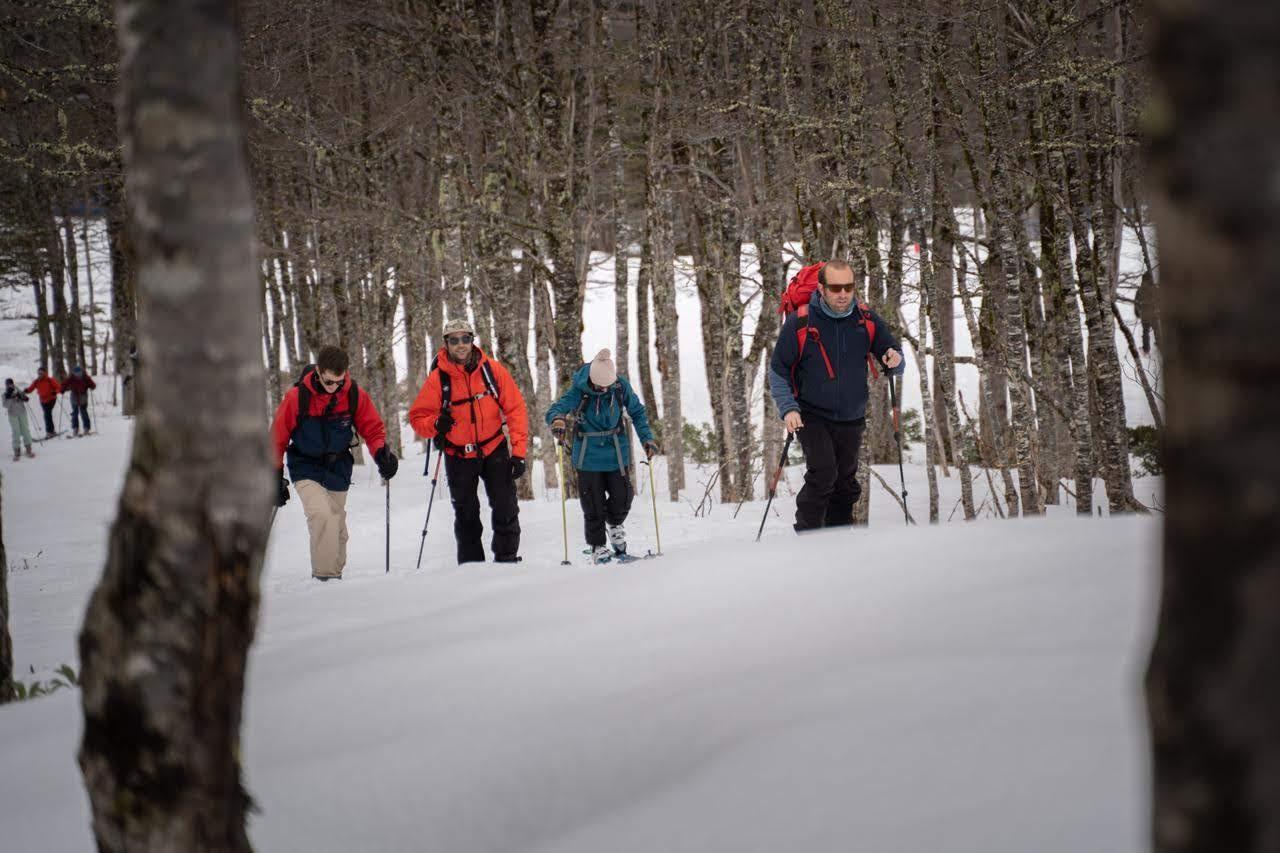
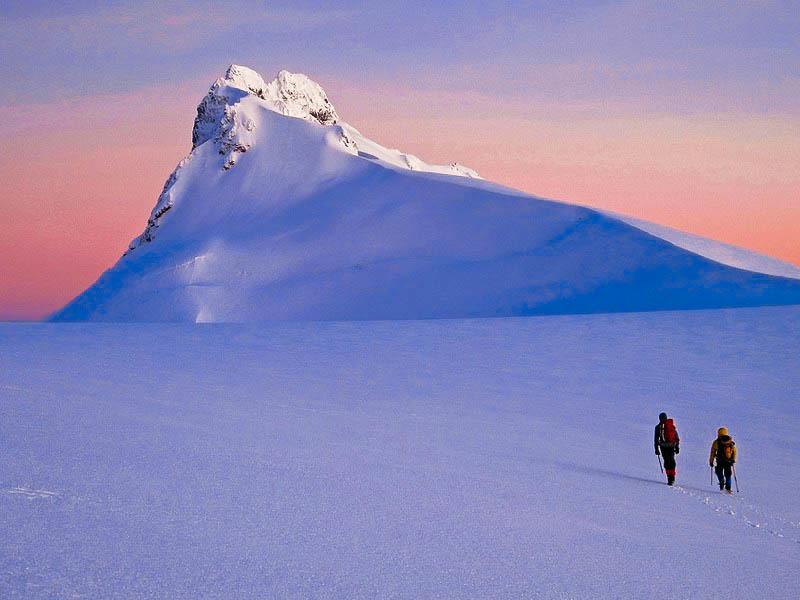
Near Panguipulli and Huilo Huilo, the Mocho-Choshuenco complex offers some of the most expedition-like touring in the Lake District. The Mocho glacier delivers sustained, wide-open skinning and skiing, and the remote, wild setting means fewer people and a real sense of adventure. Best for skiers comfortable on glaciated terrain who want to earn their turns.
Volcán Villarrica
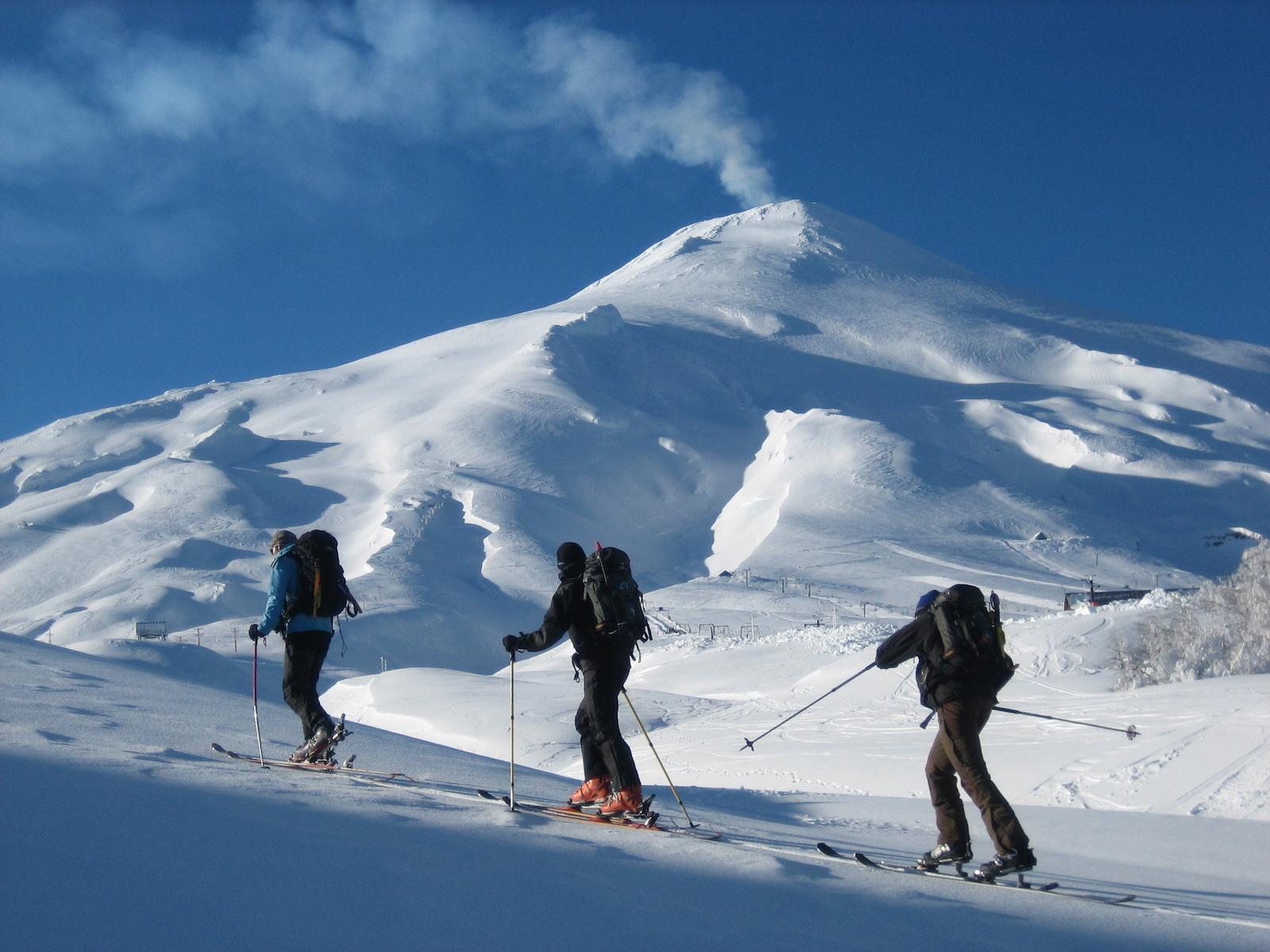
The classic cone towering above Pucón — and one of the most active volcanoes in South America, with one of the world's few active lava lakes and fumaroles steaming from the crater. You skin from the base (or ride the lower lifts when running) for a continuous descent of around 1,500 m. Because it's active, summit access depends on the volcanic alert level, so a guide and up-to-date conditions are essential. Pucón's restaurants and hot springs make it a perfect base town.
Volcán Llaima
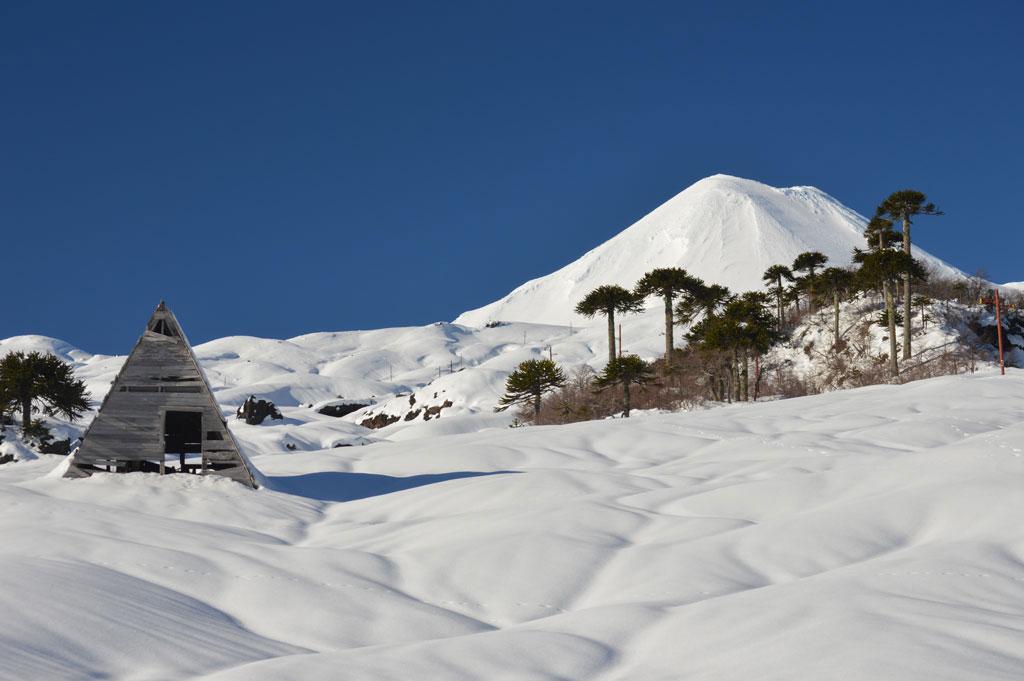
One of the largest and most active volcanoes in the Andes, set in the araucaria forests of Conguillío National Park. Its sheer volume means endless descent options and a remote feel despite reasonable access via the Las Araucarias / Los Paraguas ski area. From the crater rim, fumaroles and big-mountain views add to the sense of scale — a superb objective for linking long tours.
Corralco / Volcán Lonquimay
A favorite among ski tourers, in the Malalcahuello reserve. The Corralco ski center sits right at the base (it's a training site for the US Ski Team), so approaches are short and you can rack up big vertical in a day. Lonquimay is known for consistent corn cycles, wide-open slopes, and a summit view that takes in eight or more other volcanoes. End the day in the Malalcahuello hot springs.
Nevados de Chillán
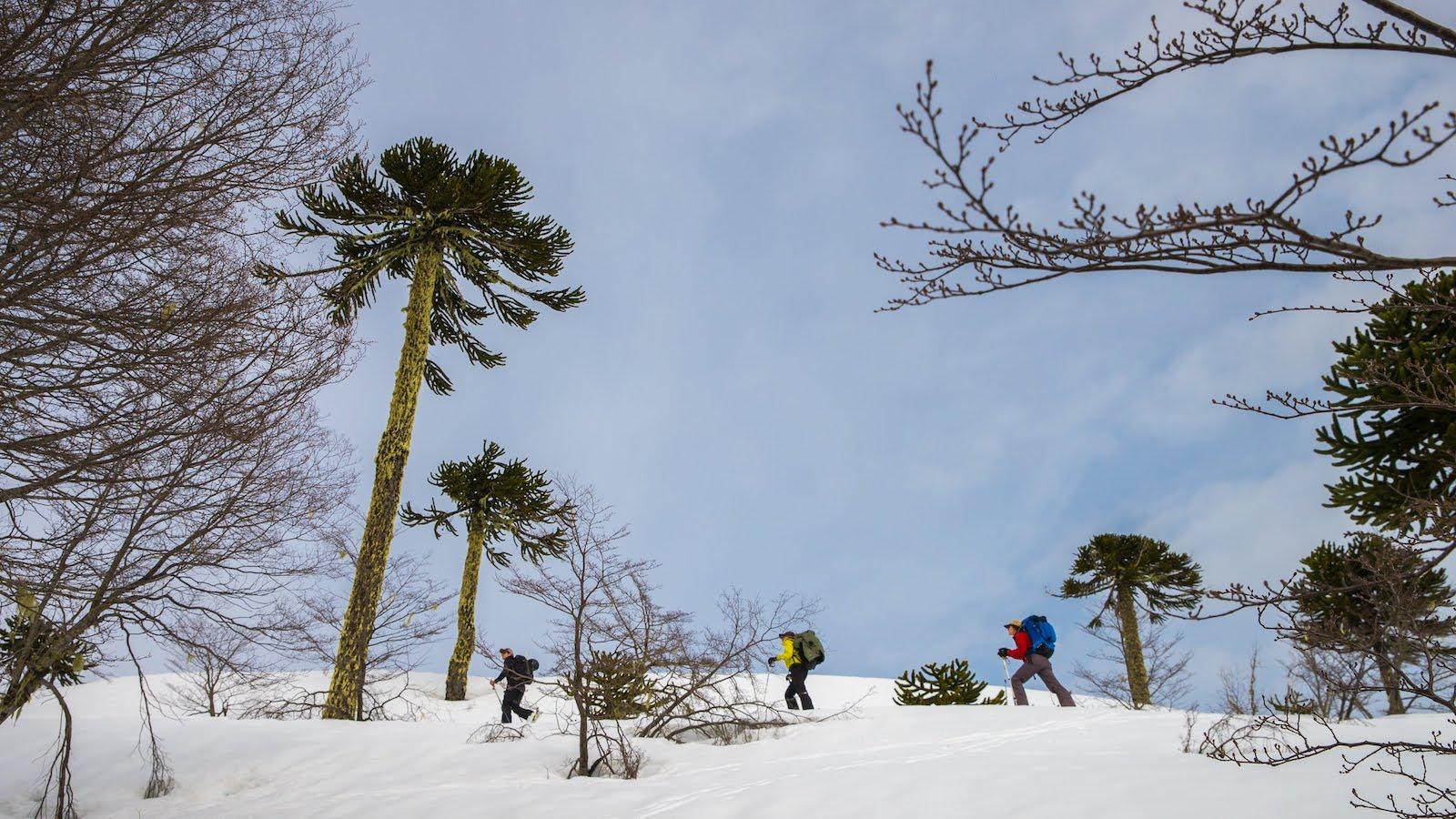
An active volcanic complex anchoring one of Chile's largest ski areas, famous for its natural hot springs. Beyond the lifts there's varied backcountry terrain — bowls, tree skiing among araucarias and long fall-line descents — suiting everyone from confident resort skiers to seasoned tourers. As an active system, keep an eye on the SERNAGEOMIN alert before venturing onto the upper mountain.
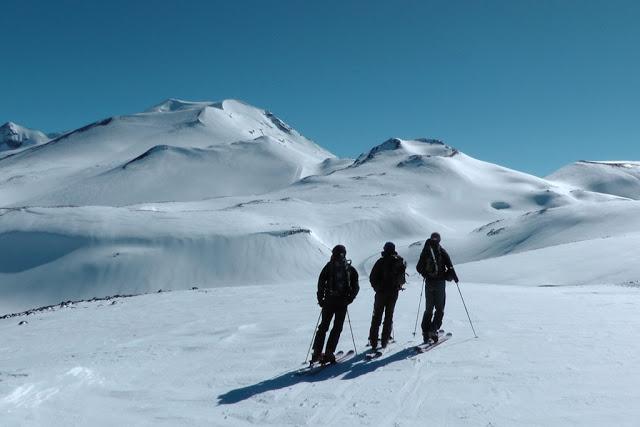
Laguna del Maule
The northernmost and wildest zone here — a high volcanic field near San Clemente, on the Argentine border. This is lunar, lake-dotted terrain for autonomous skiers chasing untracked lines far from any resort. Access is rugged, services are minimal, and weather is exposed, so it rewards experience, planning and a self-sufficient mindset. For many, that solitude is exactly the point.
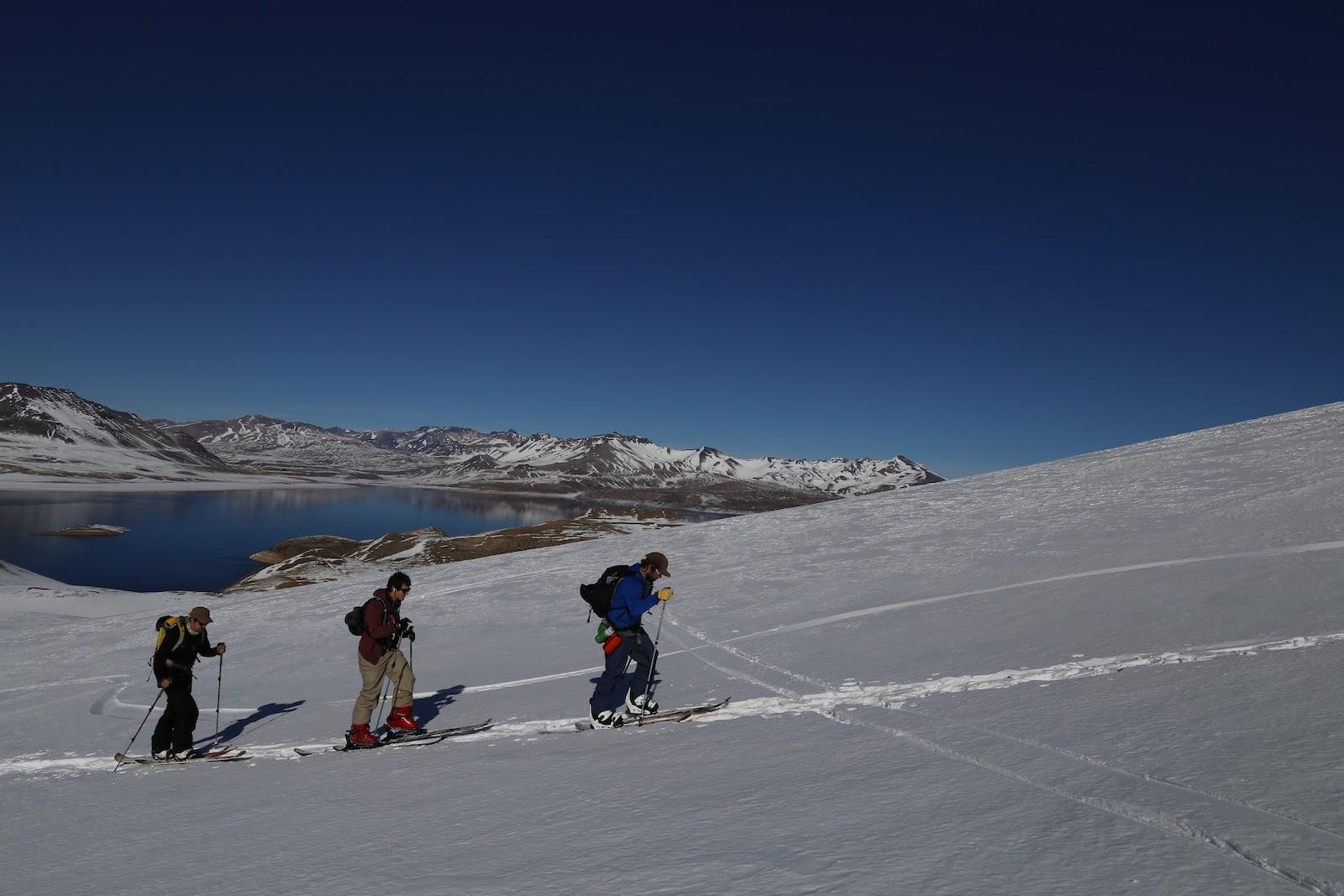
Why ski Chile's volcanoes by camper
These zones are spread across hundreds of kilometers of the Andes, and the best conditions move around with the weather. A camper turns the whole region into a flexible base camp: chase the clearest skies, sleep at the foot of the mountain, cook a hot meal after a big day, and roll on to the next volcano whenever the forecast says so — with a soak in the termas in between.
Plan your volcano ski trip
We're a local 4×4 camper crew based in Puerto Varas since 2018 — right in the heart of the Lake District's volcano country. Tell us your dates and we'll help you build a base-camp-on-wheels for the ski season.